Tuesday, 5 March 2013

Quintessential Quinzaine

Quinzaine is a lucky form.
How lucky is it?
Does it win?

Above is an example of today's form, Quinzaine.  A quinzaine has three lines, fifteen syllables, no rhyme and is arranged with seven syllables in the first line, five in the next and three in the last.  The first line is a statement and the last two are questions regarding the statement.

I have been enjoying quinzaine quite a lot and I think I might try writing a childrens' book with a series of these lovely little poems.  So far, it has been fun exercise.

Apples are red and roundish.
How round can they be?
Are they red?

Some apples are red and green.
So now are they green?
Why not red?

Apples are sometimes yellow.
Does yellow taste good?
Do I care?


I suspect quinzaine is a lot like haiku in the way that people think it's very easy, but in order to write well balanced, meaningful pieces, much attention beyond syllable count must be paid.  When your chosen form is forcing you to be economical with language, every word matters in a profound way.


Monday, 4 March 2013

Dinggedicht is a Hard Word to Say

Dinggedicht was way harder than I thought it would be.  Even after reading the wikipedia article, I didn't quite understand.  I had a hard time finding legitimate dinggedichte in English to research, and though a narrowly defined form, there is a very wide stylistic spectrum to contend with.  I hope I have a handle on this.

So, dinggedicht translates to "thing poem".  As you can probably tell, it's German.  It is dedicated to... hard to describe.  Read the wikipedia article. lol

Original Source Unknown


The Book I Keep Meaning to Read


Rectangular and smooth
with a puce dust jacket
it sits upright on a broad, cream windowsill.
Its spine is in perfect shape.


In this poem, I tried to capture the neglected aspect of a book in my house.  I hope to have conveyed that literature, unread, is unknown.  The unknown aspect of the book is told partially in the brevity of this piece, androgyny in reference to the object, and the general apathetic description; a book like any other. 

Dinggedicht is a form in which the poet strives to make the object speak for itself in tone.  The poem which really clarified this concept for me is Paradise Adrift by Judi Van Gorder.  I encourage you to follow the link and read it.

Despite the shortness of this poem, it was very difficult to write.  I was going to write two, but it would take me a while to do that again.  It's hard for me to write as plainly as this form requires.  The effect is quite pretty though.

See you tomorrow with another form.


Sunday, 3 March 2013

Terzanelle for the Disinterested

What can I say of Terzanelle?  It's super fun!  I really enjoyed the repeated lines, lack of need for consistent metre and playing with multisyllabic rhyme (my choice).  The scheme is as follows: ABA, bCB, cDC, dED, eFE, fAFA or fFAA, with capitalized letters indicating repeated lines and the first and third lines of the first triplet being repeated in the last quatrain.  This is a form I will be using again.


Photo Origin Unknown- Sometimes you wish
Spiderman would get you out of some
commitments you never should have made,
like an expert panelist gig.
Expert Panelist


You aggravate your only pundit. A
Who am I to argue? B
I think I might be redundant. A

The course is only par two. b
Your tongue still swings in your dusty trap. C
Who am I to argue? B

Ratlike, your mouth voices your crusty crap. c
My head nods and sways. D
Your tongue still swings in your dusty trap. C

No more time for pretended grace. d
If I do not get up soon I will fall asleep. E
My head nods and sways. D

I feign an exciting appointment to keep. e
You will not let me talk. F
If I do not get up soon I will fall asleep. E

All I can do is quietly gawk. f
You aggravate your only pundit. A
You will not let me talk. F
I think I might be redundant. A

Tommorow... another day, another form.

Saturday, 2 March 2013

Anatomy of Sestina


A sestina is a poetic form that has been around since the 12th century.  It is beautiful and filled with some neat maths, if you like such things.  I found that it is also quite an exercise to write in sestina because I tend to write more free form verse.  I chose the end words: dark, pond, waves, sink, light and face.  These words are reordered in a certain way (see graph) for each stanza.  The poem is capped off with a tercet containing all the end words in the order 6, 2, 1, 4, 5, 3.  I have numbered the words to make it easier to follow the structure.

Wikimedia Commons- A visual representation of the
structure of a sestina.  Note also the the
retrogradatio cruciata that builds the sestina.
Dark Pond

The shore was dread and drear and dark 1
along the rim of the faded pond. 2
It chopped itself up and broke into tiny waves 3
that caused incautious insects to sink. 4
We were unaware of the rowdy light, 5
that we were soon to face. 6

The night had dropped and I lost your face, 6
hovering on the edge of deepest dark. 1
I forgot to bring a light, 5
and us with cigarettes unlit beside the pond 2
throwing bits of our hearts never to see them sink 4
blamelessly into the waves. 3

To hell with the forgetful, dragging waves, 3
I had never had the gall to face! 6
But instead of swimming, I did sink, 4
down to grab our bits of heart in the dark, 1
beneath the frightful, gripping pond, 2
still without the aid of light. 5

At last, a blaze of ochred light 5
shone upon the jewelled waves 3
in time for you to see me fade into the pond. 2
As I drifted down, I saw your face 6
filling up the wasting dark. 1
I ceased to sink. 4

But how I wanted to sink 4
away from listless, paltry light 5
to be in sweet, forgiving dark. 1
Please, let me have the waves. 3
There are some things we are not meant to face. 6
You schlepped me from the pond. 2

Coughing water from my lungs, I inched towards the pond, 2
still hoping you would let me sink. 4
The broken heart you swallowed up had settled on your face, 6
that I could see by campfire light, 5
Glittering on the waves, 3
surrounded by close fitting dark. 1

I'll never forget your face 6 as you hunched beside the pond. 2
Your eyes were as dark 1 as a basement sink, 4
as you turned away from the light 5 and towards the lapping waves. 3

Tomorrow I will be experimenting with another form.  I don't know which one yet, so stay tuned!

Friday, 1 March 2013

Midnight Done

This poem is cobbled together from a few other poems that didn't work out.  I got it to a workable place, I think.  I intend to continue molding it until it becomes a bit more flowing.  Sorry for the roughness.  Look forward to tomorrow though.  I've been working with an old French form called sestina. It is very rigid and not at all what I'm used to.  Super exciting!

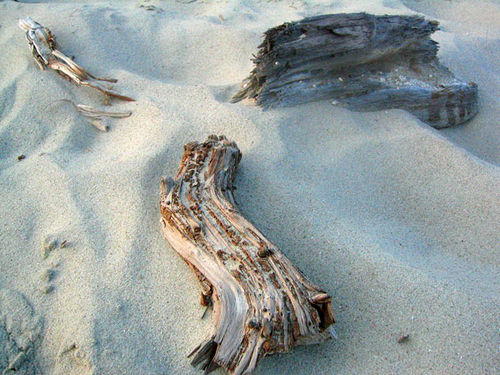
Photo by Alykat

You had me feeling helpless,
In your honeyed hurricane wake.
You left me laying like a driftwood sculpture,
On the sand.

I want you to know,
I don't understand things the way you do.
God scares the Hell out of me.

Every morning,
I hack up my sins,
And spit them in the sink,
Before I kiss you.

I don't want you to taste my lack of faith.

I should have written you a love song instead,
But words can't be pawned like violins.

I never meant to tell you the truth,
But the truth is,
I always want to live in your mind,
As the one that never hurt that bad.

I want to make a splash in your life.
No. Splashes.
Like cherries dropped on sundaes from skyscrapers.
Now there's whipped mess everywhere.
What the hell was I thinking?

I guess love was never meant to be clean.

I really should have written you a love song.
But excuses are made of rain,
So you'll get this instead.
Dessicated music.

Sorry.